
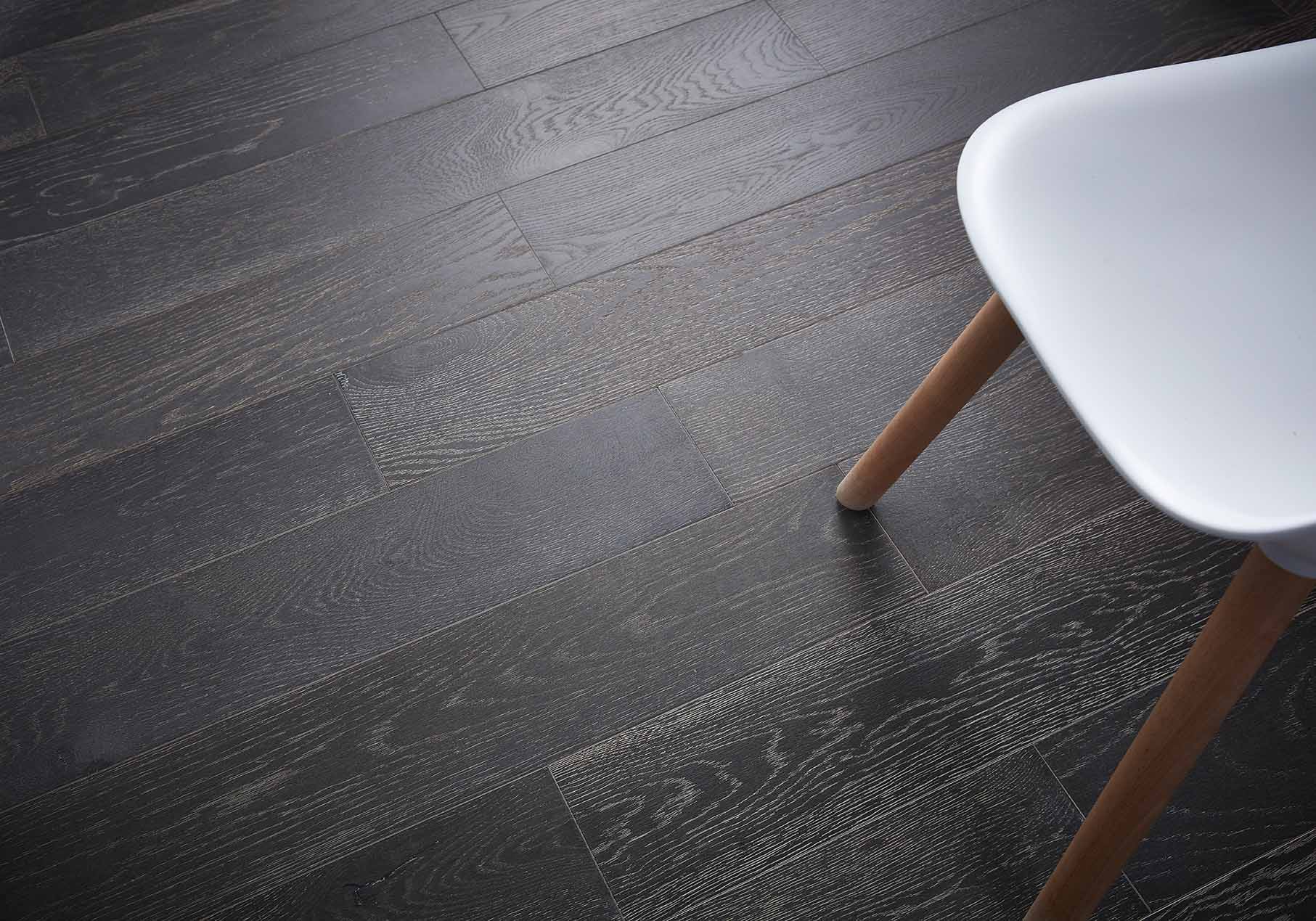
Combining fantastic design with the finest craftsmanship
Established as a family firm in 1903, Atkinson & Kirby continues to be a close-knit team that respects the craft tradition whilst always looking at the future of wood flooring. We're proud to manufacture our flooring accessories in Britain, applying innovation to ensure you constantly have the broadest, highest quality range at your fingertips.
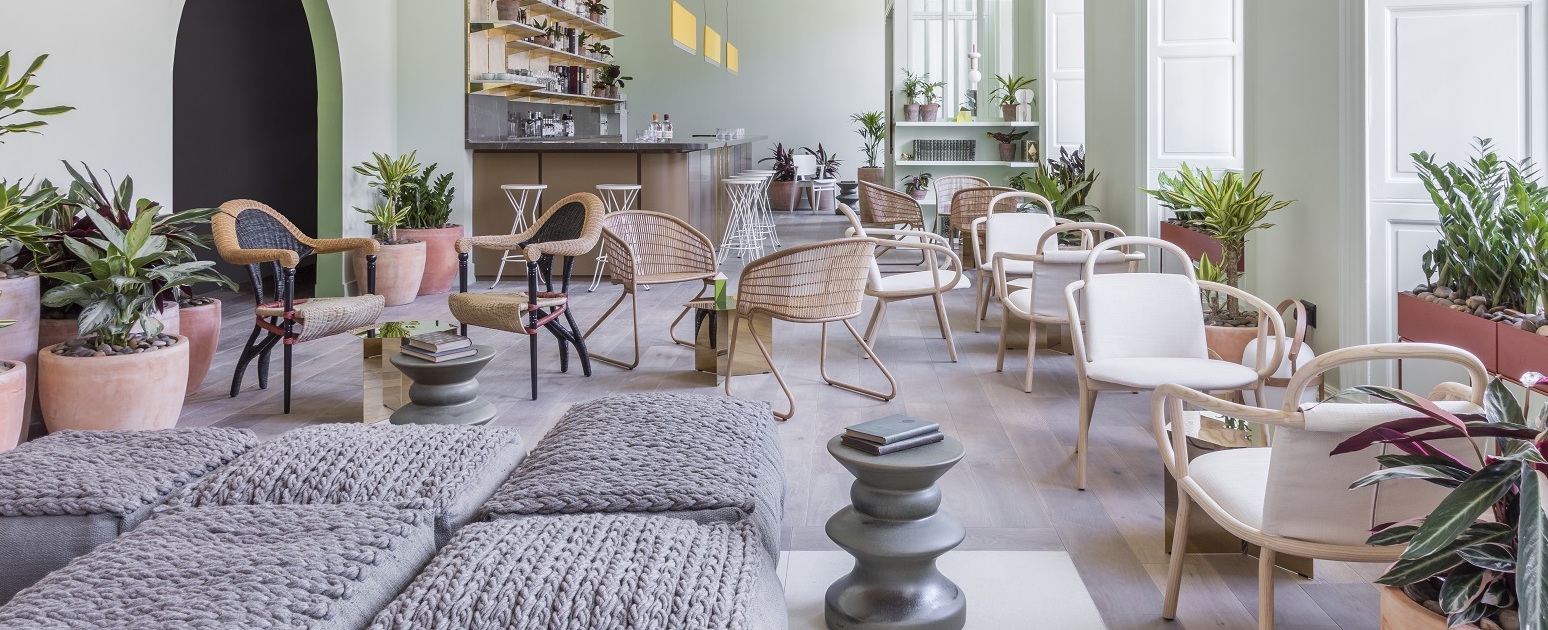
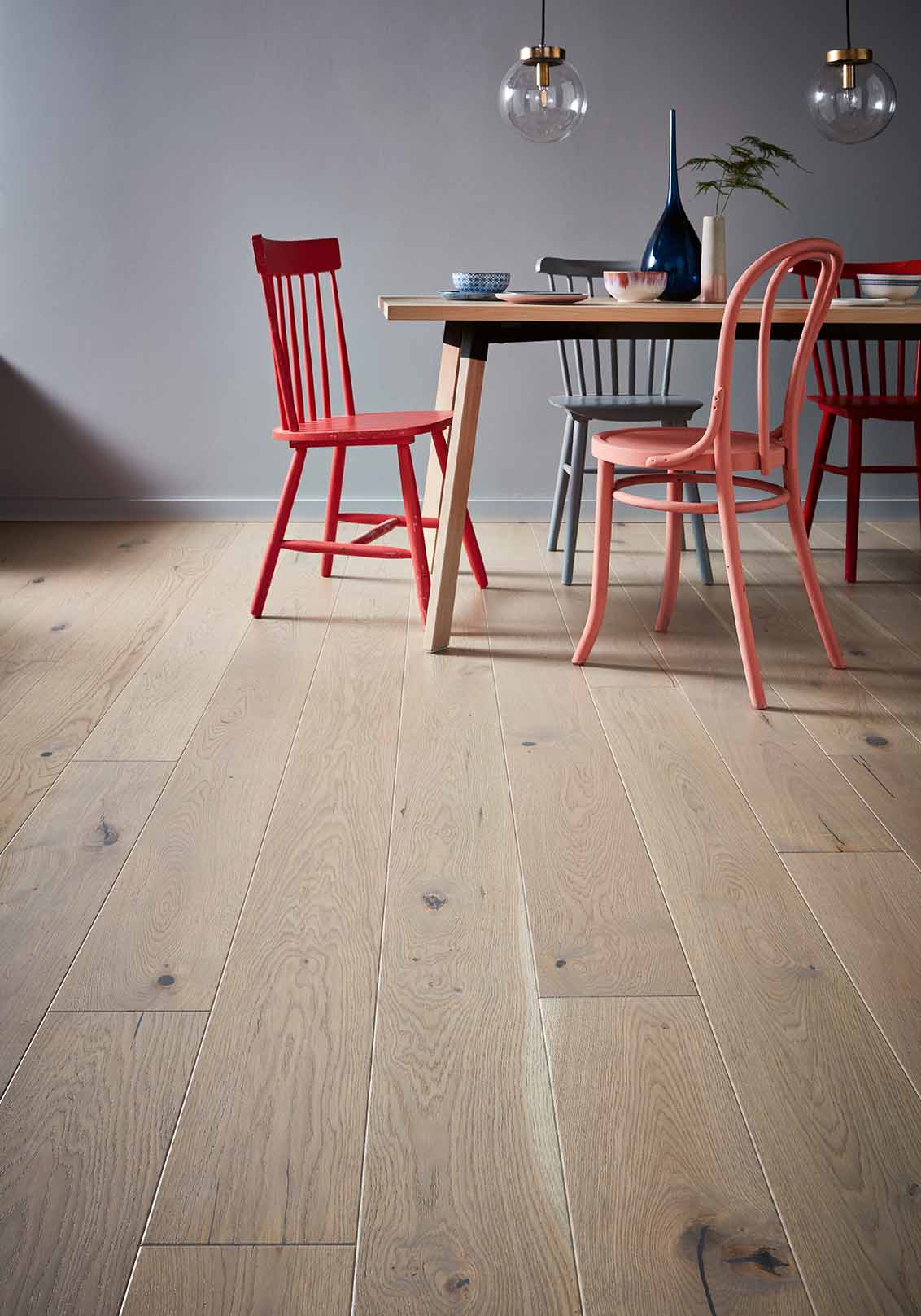
We combine over a century of skill and craft with leading technology to develop the next generation of hardwood flooring.
Our flooring collections are expertly curated to create inspiring spaces for all interiors, with continuous updates following upcoming design trends.
Our History

Crafting timber floors sustainabily.
Wood is an amazing natural resource and we feel privileged to work with it. Environmental responsibility is one of our top priorities and we are proud to support sustainable timber production with a host of environmental and sustainable accreditations.
Sustainability
Part of the Archwood Group
We’re proud to be part of the Archwood Group with Richard Burbidge. We’re based in Chirk, North Wales, and specialise in sustainable, high-quality wood products.

Established in 1903
Atkinson & Kirby was established in 1903 by John Atkinson and John Kirby. Over 100 years later we’re still proud of our traditions and reputation for providing only the highest quality hardwood flooring products for our customers.
We joined the Archwood Group with Richard Burbidge in 2003, and have been operating from North Wales ever since. We’re proud to still manufacture a selection of our flooring accessory products at our mill in Chirk.
Richard Burbidge
Our sister company Richard Burbidge’s history dates back to 1867, when Henry Burbidge set up a woodworking business in Coventry. Henry’s great-grandson Richard joined the business in 1965, and saw a huge opportunity for manufacturing quality stairparts and timber mouldings. And the rest is history!
Richard BurbidgeLatest Company News
Keep up to date with the latest in flooring development and innovation at Atkinson & Kirby.
View all newsWhen you're specifying flooring for a project, it's not just about how it looks on day one. It's about how it wears, how it ages and whether it still feels right ten years later. That's particularly important on projects where the flooring plays a big part in the character of a space. We sat down with Simon Baker, Director at Group Ginger, a Leeds-based architecture practice, to talk about why his team continues to specify Atkinson & Kirby flooring; from heritage projects to new-build interiors and what they look for in a flooring supplier. Group Ginger has specified Atkinson & Kirby flooring across projects including Leeds Music School, Whitby Street Studios, The Brunswick and Marshall Mill. What first drew you to Atkinson & Kirby flooring? “It goes back to 2017, at Scarborough Market. We were adamant we wanted natural timber, but with an engineered board for stability and consistency. Our design justification was material integrity. We wanted the timber to sit comfortably alongside the existing stone flag floor on the ground level, so the new mezzanine, inserted into a Grade II listed structure, needed that same sense of quality. Which projects have you specified A&K on? “We specify A&K consistently. Recent projects include Hartlepool Post Office, Whitby Street Studios and Goole Market Hall, alongside Leeds Music School, The Brunswick and Marshall Mill. Chiswick Oak was specified across projects including Marshall Mill and Whitby Street Studios, while other A&K flooring products have been specified across our wider portfolio, including Doncaster Corn Exchange, Middlesbrough Old Town Hall, Wakefield Courthouse and the new-build Yorkshire Air Ambulance project.” When you're choosing a hardwood flooring supplier, what matters most? “Technical support to help with installation details and clear information on wear, maintenance and suitability for the space. We've also found that contractors respect the brand and are comfortable working with the specification. That's usually a good sign in terms of cost competitiveness, product quality and consistency.” How much weight do durability and long-term performance carry in your decision-making? “It's probably the key factor. With any natural timber finish, the real questions are durability, quality and how it's going to be maintained day to day. Many of our projects are listed buildings and heritage spaces, so we want a floor that improves with age rather than just holds its own - one that reflects the integrity of the space it's in. When we can show a client a floor that's been down for ten-plus years and looks better now, more settled into the space, that's the strongest case we can make.” Atkinson & Kirby's collections span commercial flooring, engineered hardwood flooring and solid hardwood flooring, giving architects and designers flexibility when specifying for heritage restorations, high-traffic commercial spaces and new-build interiors. The team also offers dedicated design support, providing project-specific guidance on product selection, installation detail and long-term performance. To find out more about Atkinson and Kirby click here or request any specification advice email specification@akirby.co.uk
READ ARTICLEMost guides to Japandi start with the walls, the ceramics and the low furniture. The floor gets mentioned last, if at all. That order is backwards. Your floor is the single largest area of space in a Japandi room, which makes it the quietest and most consequential decision you will make. Get Japandi flooring right, and everything you place on top of it can breathe. Get it wrong, and no amount of clever styling will settle the space. This guide is about choosing that floor, not decorating around one you already have. Summary Japandi is a fusion of Japanese warmth and Scandinavian restraint, built on negative space, natural materials and a muted palette. Treat your floor as negative space, not as a feature: choose calm over character. Light, limed, and whitewashed oak suits Japandi better than dark, smoked or glossy wood. Pick plank format before colour. Long, wide, straight boards read as calm; busy herringbone competes with it. The Climate collection is built for this look, with limed and bleached oak in soft greige and grey tones. What Japandi actually asks of a floor Japandi is where Japanese design and Scandinavian design meet in the middle. From Japan, it takes warmth, imperfection and a respect for empty space. From Scandinavia, it takes light woods, clean lines and function without fuss. Put simply, Japandi style interior design is calm made visible. The important part for flooring is the role of emptiness. In Japanese interiors, there is an idea of the meaningful pause, the space between objects that gives them room to be seen. Your floor is that pause, scaled up. It is the largest uninterrupted surface in the room, so its job is not to perform. Its job is to hold everything else quietly. That single principle changes how you choose. You are not looking for the most beautiful plank in the showroom. You are looking for the one that asks for the least attention while still feeling warm underfoot. Choose light over dark: why limed and whitewashed oak suits Japandi The default advice for a calm, natural floor often points towards smoked or deeply toned oak. For Japandi specifically, lighter tends to win. Pale wood reflects daylight, keeps the room feeling open and lets the floor recede rather than anchor the eye. Dark floors do the opposite: they frame and ground a room, which is a lovely effect, but it pulls attention downward and shrinks the sense of air that Japandi depends on. This is where limed and whitewashed oak earns its place. Liming lightens the tone and lifts the natural grain, so you keep the texture of real timber without the visual weight of a dark stain. The result is a floor that feels soft, airy and quietly rustic, which is exactly the register Scandinavian wooden flooring is known for. The Climate collection is designed around this idea. It brings together bleached, weathered and limed oak in soft greige and grey tones, with visible splits and knots that give a gentle, lived-in character. Manoa Oak is a good example: a chalky, brushed finish where the grain seeps through rather than shouts, making it a natural fit for Scandi minimalist rooms. The negative-space test: choose plank format before colour Here is the step most people skip. Before you settle on a colour, decide on the shape and layout of the boards, because format affects calm more than tone does. A repeating pattern, such as herringbone or chevron, creates rhythm, and rhythm draws the eye. That is wonderful in a period hallway. In a Japandi room, it works against you because the floor starts to compete with the emptiness you are trying to protect. Long, wide, straight-laid boards do the opposite. They read as one continuous plane, which is precisely what negative space should do. Use this simple test when you are comparing samples and layouts. Decision Keeps the floor calm Pulls focus Plank layout Long, straight, single-direction boards Herringbone or busy parquet Board width Wide and consistent Narrow strips or mixed widths Grain and knots Subtle, low-contrast, limed High-contrast, heavy character Tone Pale limed, greige, soft grey Deep, glossy or red-toned Finish sheen Matt lacquer or natural oil High gloss None of the choices on the right are wrong in themselves. They are simply louder, and Japandi rewards quiet. If you find yourself drawn to a striking parquet, that is a signal the space wants a different style, which is worth knowing before you order. For Japandi and Scandi-rustic interiors, we often see homeowners favouring straight-laid oak flooring over parquet because it delivers a quieter, more harmonious backdrop that perfectly supports the clean lines, natural materials and uncluttered aesthetic these schemes are renowned for. While parquet introduces pattern and visual interest, Japandi design is rooted in restraint, balance and a strong connection to nature. Straight planks create a sense of openness and flow, allowing the beauty of the timber’s grain and soft, light-enhancing tones to become the focal point without overwhelming the space. “A standout choice for achieving this look is Atkinson & Kirby Manoa Oak Engineered Wood Flooring. Installed in a straight-laid format within an open-plan kitchen, its chalky, limed finish softens the overall scheme while allowing the delicate oak grain to gently show through, adding warmth and authenticity. The light-reflective surface helps brighten the room and reinforces the airy, organic feel associated with Scandinavian-inspired interiors”. - Stuart Cottle, Product Manager Read the light in your room before you pick a tone Two rooms can take the same plank and look completely different, because light changes how a pale floor behaves. This is a quick check that saves a lot of second-guessing, and it matters more in the UK, where natural light runs cooler for much of the year. Your room's light A tone that tends to work Bright and south-facing The coolest bleached and whitewashed whites. We recommend Baltra Oak. North-facing or cooler light Warm-limed or greige oak, to avoid a cold grey cast. We recommend Tanami Oak. Low light or a small room Pale, chalky oak that bounces what light there is. We recommend Manoa Oak. The mistake to avoid is choosing a very cool grey floor for a north-facing room. Without warm daylight to lift it, that grey can read as flat and clinical, which is the opposite of the effect you want. A greige or gently warmed lime keeps the room calm without tipping into cold. If your space struggles for light, such as a conservatory on a dull day, the palest chalky oaks give you the most lift. Japandi room by room The principles hold across the home, but each room has its own quiet demands. Minimalist kitchens A Japandi kitchen leans on flat-fronted, handleless cabinetry and clear worktops, so the floor is often the most visible material in the room. Run your boards along the main sightline, usually towards the window or the length of the space, to reinforce that sense of one calm plane. Engineered oak is the practical choice here, since its layered construction copes better with the temperature and moisture swings of a working kitchen than solid timber. Discover which flooring type is best for you in our blog. A matt lacquer finish keeps the surface easy to wipe while holding the low-sheen look that minimalist Scandinavian kitchen design relies on. Living rooms The living room is where Japandi is most tempted into clutter, so let the floor do the grounding. A limed or greige oak, like Mojave limed oak, gives you a warm, low-contrast base that flatters low sofas, floor cushions and natural textiles without darkening the room. This is the heart of a Scandinavian minimalist living room: a floor that quietly connects everything rather than dividing the space into zones. Bedrooms In the bedroom, warmth underfoot and softness to the eye matter most. The palest tones like Seba Oak in the range suit a room designed for rest, and the subtle knots and splits of a rustic-grade oak like Rasselas Oak add just enough character to feel natural rather than sterile. This is Scandi rustic style at its most restful, a floor that feels handmade without being busy. The two-wood rule that keeps a scheme coherent If there is one habit that separates a considered Japandi room from a muddled one, it is discipline with wood tones. A common misstep is pairing a pale Scandi floor with several different mid-brown furniture woods, which quickly turns calm into clutter. The fix is simple. Give the room two wood temperatures and no more: one cool or pale wood, and one warm accent wood. Let your floor be the cool, quiet constant, and let a single warm timber carry through the furniture. This is simplicity by design, and it is why so many Scandi flooring ideas begin with the floor and work outward, rather than the other way around. Restraint is the whole point. Japandi is not about owning less for its own sake. It is about choosing carefully, so the few things you keep are given room to be seen. Your floor sets that tone before a single object is placed on it. Start with the floor Everything in a Japandi room is easier once the floor is settled, because the largest surface is already working in your favour. Choose light over dark, format before colour, and let the wood stay quiet. Explore the limed, bleached and whitewashed oak in the Climate collection to find the calm foundation your space is built on, or browse all of our collections to compare the full range. When you have a shortlist, request a sample and see how it reads in your own light before you commit.
READ ARTICLE